
The Unstoppable Resurrection: Evidence, Hope, and Purpose in John 20:1-10
The resurrection of Jesus Christ is not merely a historical footnote or a seasonal celebration; it is the cornerstone of the Christian faith. While many focus on the sacrifice of the cross, the message of John 20 reveals that the story did not end with "It is finished." The resurrection is the essential force that transforms our past, present, and future..
This post explores the three primary pillars of the resurrection as outlined in John 20:1-10: evidence for the skeptical, hope for the exhausted, and purpose for life.
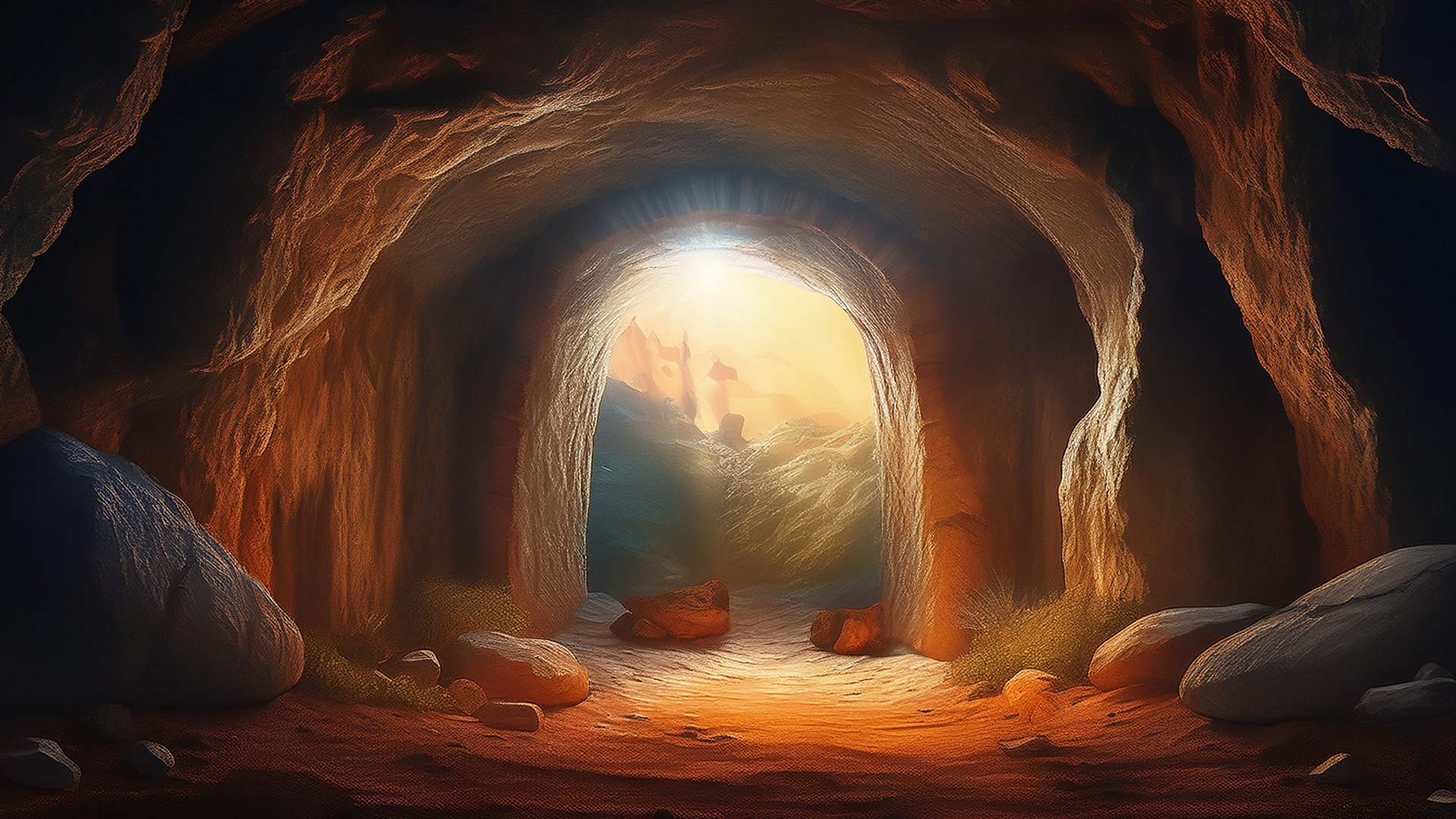
The Theological Necessity of the Resurrection
To understand the empty tomb, we must first understand the journey John has taken us on throughout his Gospel. John begins his account with the eternal nature of Jesus, stating, "In the beginning was the Word," establishing that Jesus is the second person of the Trinity who took on human form. Throughout his writing, John records Jesus’s "I Am" statements—the door, the good shepherd, the true vine—leading up to the ultimate climax of the crucifixion.
When Jesus died on the cross, He uttered the words, "It is finished," signifying the completion of His work to remove the penalty of sin. This is often referred to as penal substitutionary atonement, where Jesus fulfilled the debt we owed, restoring our relationship with God. However, while the cross removes the penalty, the resurrection breaks the power of sin.
Without the resurrection, the Christian life is fundamentally incomplete. The Apostle Paul argued in 1 Corinthians 15 that if Christ has not been raised, believers are still in their sins and are to be pitied above all people. The resurrection is the verification and solidification of everything Jesus claimed to be.
--------------------------------------------------------------------------------
1. Evidence for the Skeptical: Meticulous Eyewitness Details
John’s account of the resurrection in chapter 20 is not a theological treatise; it is a precise narrative designed to provide historical evidence. By focusing on eyewitness details that only someone present could know, John makes a case for the physical reality of the empty tomb.
The Significance of the "First Day"
John notes that the events took place on the "first day of the week." While other Gospel writers might refer to the "third day," John’s emphasis on the "first day" points toward a new creation. Just as God began His work of creation on the first day in Genesis, the resurrection signifies that Jesus is ushering in a new covenant and a new way of being.
The Testimony of Mary Magdalene
Mary Magdalene was the first to arrive at the tomb "while it was still dark." Her role in this narrative is a profound piece of historical evidence. In the first century, a woman’s testimony was not legally validated in court. If John were attempting to fabricate a story to convince the masses, he likely would not have chosen a woman as his primary witness.
The inclusion of Mary—who had been healed of seven demons and had financially supported Jesus's ministry—serves as a "true testimony." She arrived expecting to find a body to pay her respects, but instead found the stone rolled away and immediately ran to tell the disciples, "They have taken the Lord out of the tomb."
The Race to the Tomb and the Linen Cloths
Upon hearing Mary's report, Peter and the "other disciple" (John) ran to the tomb. John includes the detail that he outran Peter, reaching the tomb first. While this is often seen as a humorous anecdote, the value of this detail lies in its vividness. Only an actual eyewitness would remember the specific physical exertion and the order of arrival decades later.
The most compelling physical evidence found inside the tomb was the linen cloths.
Order, Not Chaos: John observed the linen cloths lying there and the facecloth folded up neatly in a place by itself.
The Case Against Theft: If grave robbers or authorities had stolen the body, they would not have taken the time to unwrap a tortured, bloody corpse and neatly fold the linens. The state of the tomb suggests that Jesus was not moved by human hands; He simply rose out of the wrappings.
--------------------------------------------------------------------------------
2. Hope for the Exhausted: The Promise of Transformation
The resurrection offers a profound hope that can transform despair, particularly for those who feel weary or exhausted by the trials of life. This hope is rooted in the unique nature of Jesus’s resurrected body.
The Difference Between Jesus and Lazarus
To highlight the uniqueness of the resurrection, we can compare it to the raising of Lazarus in John 11.
Lazarus was dead for four days and came out of the grave still bound in his burial cloths. Most importantly, Lazarus would eventually die again.
Jesus, however, left His burial cloths behind. He rose in a glorified body that was distinctly different from His earthly body—one that would never die again.
Jesus as the "First Fruits"
Drawing from 1 Corinthians 15, we can see that Jesus is the "first fruits" of the resurrection. In agricultural terms, the first fruits are the initial harvest that indicates much more is coming.
Because Jesus was raised, those who are "in Christ" have the promise that they too will be raised in glorified bodies. This provides eternal security and comfort. No matter the shape of our physical bodies now—whether they are aging, failing, or broken—we have the hope of spending eternity in a body that is no longer subject to decay.
--------------------------------------------------------------------------------
3. Purpose for Life: Living with an Eternal Vision
Finally, the resurrection gives us a reason to orient our lives toward eternity rather than just the temporary concerns of the present.
The Power of Hindsight
Initially, the disciples did not understand the scriptures regarding the resurrection. Even though Jesus had taught them about it for three years—using metaphors like tearing down the temple and rebuilding it in three days—they lacked a mental "reference point" to attach these teachings to.
However, once they saw the evidence, John "saw and believed." This belief changed everything. They were no longer just followers of a teacher; they were witnesses to the living God.
Holy Spirit Power for Today
The resurrection is not just about what happens after we die; it is about the power available to us now. The same Holy Spirit power that raised Jesus from the grave is active in believers today. This power allows us to:
Lift our eyes beyond temporary struggles.
Live with a vision that affects the next 10,000 years, not just the next month.
Shifting Perspectives
In a similar way, mothers pour into their children, not just for the immediate moment, but with a vision for who those children will become 20 years down the road. The resurrection calls Christians to live today with a vision of how their actions will echo into eternity.
--------------------------------------------------------------------------------
Conclusion: An Unstoppable Truth
The resurrection of Jesus is the ultimate proof that He is who He claimed to be. It provides the evidence needed to answer our doubts, the hope needed to sustain our weariness, and the purpose needed to direct our lives.
As you reflect on John 20:1-10, consider how the reality of the living Christ changes your perspective. You are not living for the "here and now" but for a kingdom that is eternal and a Savior who is unstoppable.
--------------------------------------------------------------------------------
Reflection Questions:
How do the specific details of the folded linen cloths strengthen your faith in the historical resurrection?
In what areas of your life do you need to experience the "hope for the exhausted" that the resurrected body of Jesus promises?
How would your daily decisions change if you focused on their impact 10,000 years from now instead of just next month?