
The New Adam: How Jesus Retraced Our Steps to Restore Paradise
Have you ever experienced that sinking feeling of realizing you’ve misplaced something vital? Perhaps you’re reaching into your pocket for your keys just as you’re about to leave for an important meeting, only to find they aren't there. In that moment, you stop and begin to retrace your steps. You go back to the last known position where you had what you needed, trying to find the point where things went wrong so you can retrieve what was lost.
In many ways, the human condition is defined by a similar search for something lost. Many people spend their lives trying to be "good," showing kindness to others and providing for their families, yet they sense an internal deficit. When we eventually stand before our Maker, we may realize we are missing the very thing required to enter His kingdom: purity and righteousness. Instead of the required "dress robes" of holiness, we find ourselves clothed in "filthy rags".
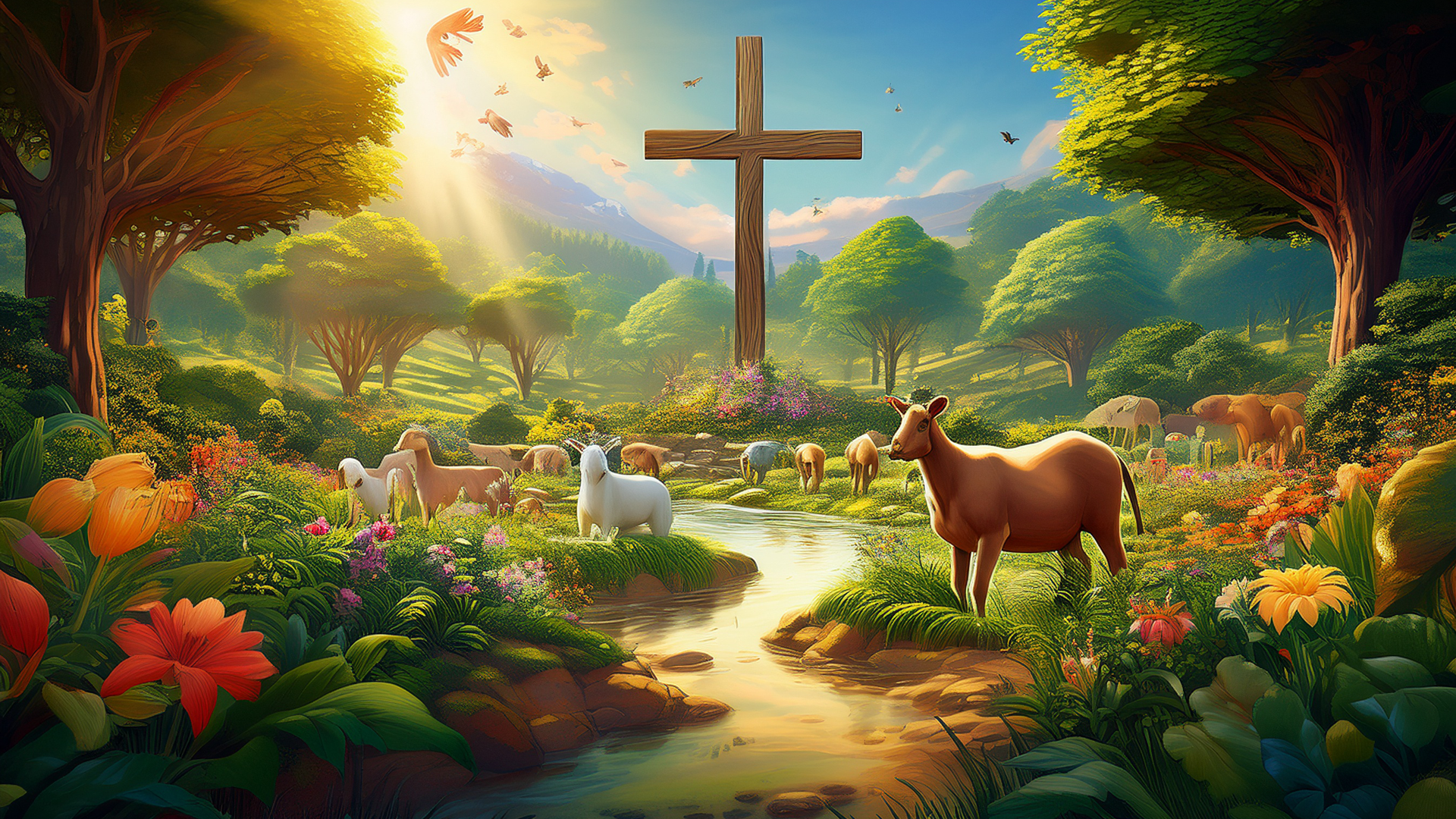
The Bible tells us exactly where these garments were lost—in the Garden of Eden. Because of sin and rebellion, humanity was exiled from God's presence, losing the original righteousness we once possessed. The tragedy of our situation is that we are unable to go back; we cannot retrace our steps to the beginning to retrieve our righteousness on our own.
However, the core message of the Gospel is that while we cannot go back to the beginning, Jesus can. As the New Adam, Jesus Christ retraced the steps of humanity to provide the redemption we could never achieve for ourselves. This profound truth is beautifully illustrated in the burial of Jesus, recorded in John 19:38-42.
1. A New King: Stepping Out of the Shadows
The burial of Jesus was not merely a logistical necessity; it was a royal declaration. In John 19, we see two prominent men—Joseph of Arimathea and Nicodemus—stepping out of the shadows to honor Jesus.
The Transformation of Joseph of Arimathea
Joseph of Arimathea was a man of high social standing and a member of the Sanhedrin, the ruling Jewish council. This was the same council that had actively sought Jesus' death and persuaded Pilate to crucify Him. While Joseph was a true disciple who believed in Jesus as the Messiah, he had kept his faith secret because he feared the Jewish leaders.
However, after the crucifixion, a significant shift occurred. Joseph gained the courage to make his faith public by asking Pilate for Jesus' body. This was a bold and risky move; there was no way to publicly remove a body from a Roman cross without drawing attention and potentially placing a target on his back. Joseph was no longer afraid of losing his rank or reputation because Jesus now sat on the throne of his heart. This reveals the first aspect of the New Adam: He is a New King.
Nicodemus and the Tribute of a Lifetime
Joseph was not alone in his transition from secrecy to public devotion; he was joined by Nicodemus. Nicodemus was also a member of the Jewish council who had previously approached Jesus only under the cover of night. It was to Nicodemus that Jesus spoke the famous words regarding the necessity of being "born again" of water and the Spirit to see the Kingdom of God.
Nicodemus arrived at the tomb bringing approximately 75 pounds of expensive burial spices, a mixture of myrrh and aloes. Some estimate the value of these spices to be equivalent to 100 years of wages for an average worker—essentially a lifetime of earnings poured out for Jesus. By bringing myrrh, Nicodemus offered a gift fit for a king, echoing the gifts brought by the wise men at Jesus' birth.
The Reign of the New King
In the original Garden, the first Adam was meant to be a "vice-regent" or king over the earth, exercising dominion over all creation. However, Adam failed and his kingly dominion became corrupted. Jesus, as the New Adam, succeeded where the first man failed. He is the New King who does not rule by external force but by internal heart transformation. The actions of Joseph and Nicodemus demonstrate that when the New King reigns, followers are willing to count all worldly status and wealth as loss compared to the glory of Christ.
2. A New Garden: The Womb of New Creation
The location of Jesus' burial is of immense theological significance. John 19:41 specifies that "in the place where he was crucified there was a garden, and in the garden a new tomb".
Retracing the Steps to Eden
This garden setting points directly back to Genesis 2 and the original Garden of Eden. Jesus being buried in a garden signifies that He is the "Last Adam" or the "Second Man". According to 1 Corinthians 15, while the first Adam was a man of dust from the earth, the second man—Jesus—is from heaven.
By being buried in a garden, Jesus is "retracing our steps" back to the beginning where God and man originally communed. This garden tomb serves as a "new Eden," the site from which a new creation spreads. As 2 Corinthians 5:17 states, "If anyone is in Christ, he is a new creation".
The Presence of God Restored
In the Old Testament, the Tabernacle and Temple were designed with garden imagery (embroidered on the veils) to signify the presence of God that was lost in Eden. When Jesus—the "God-man"—was laid in the garden tomb, He was entering that presence as the perfectly righteous man who fulfilled all of God's requirements.
The text also highlights that Jesus was laid in a "new tomb" (a virgin tomb), just as He was born from a virgin womb. This tomb is described as the "womb of a new creation". Jesus spent the Sabbath in the tomb, resting from His finished work of redemption, much as God rested after the original creation.
3. A New Bride: Life from the Side of the New Adam
The most profound connection between the first Adam and the New Adam involves the creation of a bride.
The Deep Sleep of the First Adam
In Genesis 2, God caused a "deep sleep" to fall upon Adam. While Adam slept, God took a rib from his side and fashioned a bride, Eve. This established the original union in the Garden: Adam and his bride.
The Pierced Side of the New Adam
This provides us with a powerful parallel to Jesus on the cross. After Jesus died, a soldier pierced His side, and blood and water flowed out. Just as Eve was fashioned from the side of the first Adam, the Church (the Bride of Christ) is fashioned from the side of the New Adam.
As Ephesians 5 explains, Christ loved the church and gave Himself up for her, cleansing her by the "washing of water with the word" to present her to Himself in splendor, without spot or wrinkle. The blood and water that flowed from Jesus' side symbolize this cleansing and the very elements that provide for the existence of the Church. In the new garden of the tomb, there are once again only two primary figures: the New Adam (Jesus) and His Bride (the Church).
Conclusion: Trusting the Work of the New Adam
The story of the burial of Jesus in the garden tomb is a call to surrender our own attempts at "retracing our steps". We often try to be the kings of our own lives, constructing our own "gardens" of safety, comfort, and self-righteousness. However, the new garden belongs to Christ alone.
We cannot earn our way back into God's presence through our own works. Like Nicodemus, we must realize that a lifetime of "rule-following" is worth nothing compared to the righteousness of Christ. We must be "born again" through the washing and renewal of the Holy Spirit.
Jesus, as the New Adam, has already done the work. He has retraced the steps, paid the price, and prepared the way. Our call is to trust in His wisdom, lean on His work, and allow Him to wash and cleanse us so that we may be part of His Bride.
Are you ready to stop trying to build your own kingdom and submit to the New King? The road to resurrection is open, and the New Adam has provided everything you need to enter the eternal garden.
--------------------------------------------------------------------------------
Key Takeaways:
The New Adam: Understanding Jesus as the fulfillment of the first Adam’s failure.
John 19:38-42 Commentary: Insight into the roles of Joseph of Arimathea and Nicodemus in the burial of Christ.
Biblical Garden Imagery: The theological link between Eden and the garden tomb.
The Bride of Christ: How the Church is formed from the sacrifice of Jesus.
Redemption & Restoration: How Jesus "retraces the steps" of humanity to restore our relationship with God.