
Why We Can Trust the Arrested Messiah: A Deep Dive into John 18:1–11
Imagine you are embarking on a cross-country journey, driving from the north, down through the south, and back to Maryland. You are the only one in the vehicle who can drive, and you are carrying three passengers: two young children and an aging senior adult, none of whom have money or the ability to assist with the driving. In this scenario, you have a critical choice to make: what vehicle will you pick?. Some might choose the largest car for comfort, even if the gas is expensive, while others might pick the smallest car to save money. However, for most, the most important factor is reliability. You want a car that is dependable and can be trusted to get you to your destination without breaking down on the side of the road with vulnerable passengers.
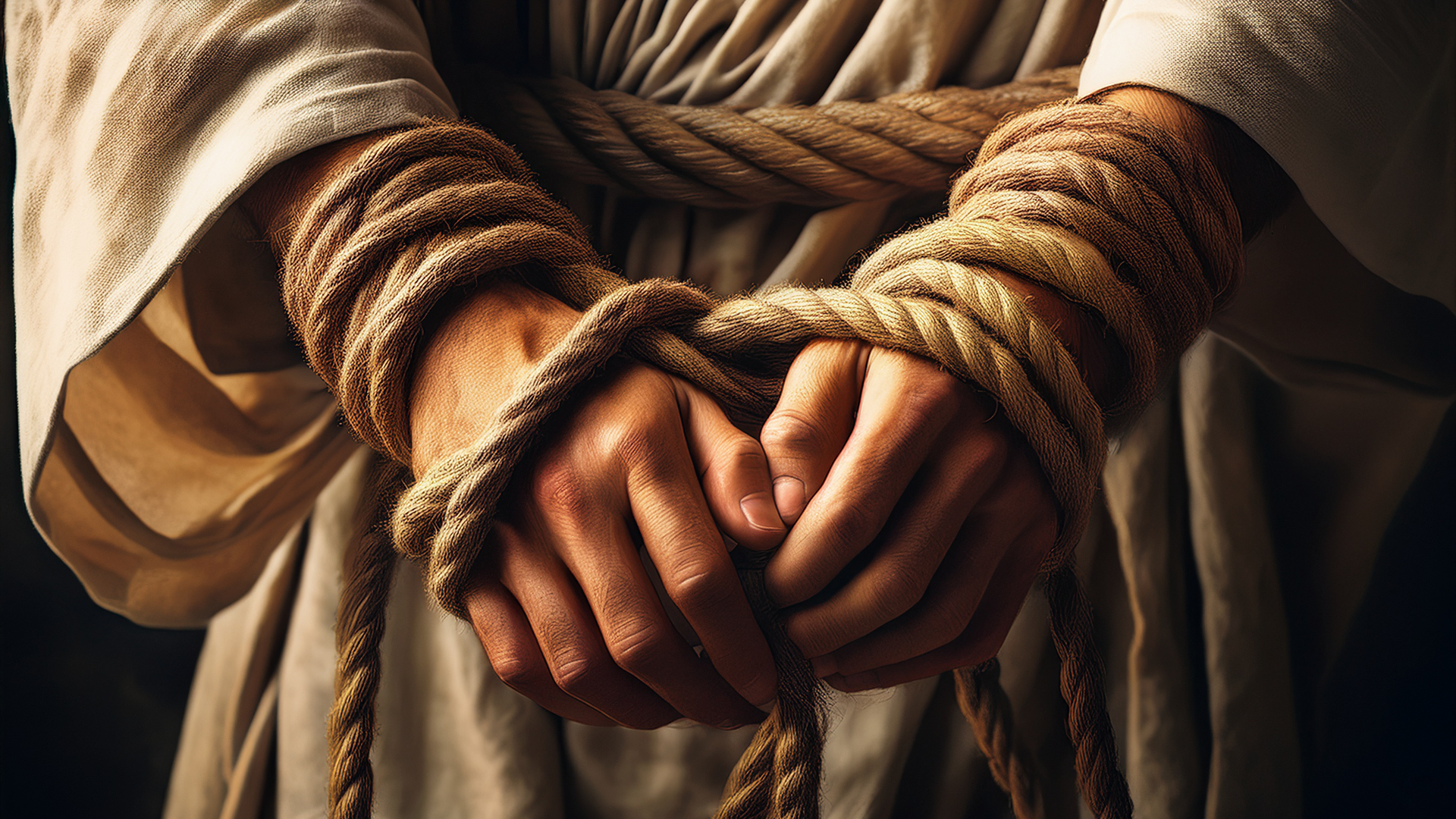
As Christians, we are on a similar journey through life, and when times get hard, we often find ourselves questioning if our faith is reliable and sustainable. We want to know if the person we are following is truly capable of getting us where we need to be. In John 18:1–11, we see a moment that, at first glance, looks like a total breakdown: the arrest of Jesus. To the first-century audience, this was a massive stumbling block—how could a man who claimed to be God be arrested by mere men?. Yet, through this narrative, the Bible shows that the arrest of Jesus actually proves He is the Messiah and demonstrates His identity as our High Priest, King, and Prophet.
1. Jesus as Our High Priest: The Sacrifice at the Brook Kidron
To understand why we can trust Jesus even in His arrest, we must first look at His role as our High Priest. John connects the beginning of chapter 18 to the events of chapter 17, where Jesus offered what is known as the "High Priestly Prayer". This prayer was not random; it followed the specific structure for high priests found in Leviticus 16. By following this structure, Jesus was identifying Himself as the final and true High Priest who would perform the ultimate function of that office: making a sacrifice for the people.
The setting of the arrest is deeply symbolic. After the prayer, Jesus and His disciples left the upper room and crossed the Brook Kidron to enter a garden. In the arid climate of Israel, this brook was often dry, but during the time of Passover, it would have been flowing with something significant. Because the temple was located on a hill above the valley, the blood from the sacrifices would drain down into the Kidron Valley.
During Passover, approximately 200,000 lambs were sacrificed. Their blood was poured over the altar and drained into the Brook Kidron. As Jesus stepped across that brook to enter the garden, He was literally stepping over the blood of the Passover lambs. While the disciples might have missed the significance, Jesus knew exactly what it meant: He was about to become the final sacrifice for the sins of the people. He was not being caught by surprise; He was the High Priest preparing to offer Himself.
2. Jesus as Our King: The Power of the Divine "I Am"
The second reason we can trust Jesus is that He is our King, a fact He made clear during the moment of His arrest. When Judas arrived at the garden, he brought with him a "band" of soldiers and officers. In Roman military terms, a "band" referred to a group of 200 to 600 trained soldiers. They came armed with weapons, lanterns, and torches, fully expecting to have to hunt for a man hiding in the shadows.
Instead of hiding, Jesus took total control of the situation. He stepped forward and asked them, "Whom do you seek?". When they replied that they were looking for Jesus of Nazareth, He responded with the words, "I am he". In the original Greek, the "he" is implied; Jesus simply said, "I am". This is the divine name of God revealed to Moses in Exodus 3.
The reaction of the 600 soldiers was immediate and supernatural: they drew back and fell to the ground. This was not a typical reaction to a simple statement; it was a physical response to the revelation of God’s glory. Even while being "arrested," Jesus demonstrated that He had more power than the entire Roman force. He was the one in charge of the conversation and the situation.
Furthermore, as a King, Jesus acted as the Good Shepherd. He didn't ask the soldiers for permission; He commanded them to let His disciples go. He was fulfilling His word that He would lose none of those given to Him. Unlike a hired hand who runs when danger comes, Jesus stood His ground to protect His "sheep" while giving Himself up to fulfill the Father’s plan.
The Challenge of Following the King
Knowing that Jesus is King requires a response from us. Just as the disciples stopped what they were doing to follow Him, we are called to relinquish the world to follow His lead. Pastor Myers points out a common struggle for modern Christians: trying to live in the world while also trying to be a devoted follower of Christ.
Affections for the world will eventually kill your affections for God, and vice versa. You cannot successfully do both because there is not enough time or mental capacity to serve two masters. Following the King means being under His lordship and rule, which often requires shutting out the noise of the world—like news or entertainment—to focus on God’s calling. While this path isn't always easy, it is always good.
3. Jesus as Our Prophet: Revealing the Cup and Healing the Ear
Finally, the arrest proves Jesus is our Prophet. A prophet is one who reveals God’s truth and plan to the people. We see this in the interaction between Peter, Jesus, and Malchus, the high priest’s servant.
When the soldiers moved to take Jesus, Peter drew a sword and cut off Malchus’s ear. Peter was sincere in his desire to die for Jesus, but he was still operating under the mistaken belief that the Messiah’s kingdom would be established through political and physical power. Jesus immediately corrected him, saying, "Put your sword into its sheath; shall I not drink the cup that the Father has given me?".
By identifying the arrest as the "cup" from the Father, Jesus was revealing God’s sovereign plan. He was showing that His suffering was not an accident or a failure of power, but a fulfillment of prophecy.
In a powerful act of mercy, Jesus healed Malchus’s ear. As a Prophet, Jesus restored the man's ability to hear, symbolizing that even those who come to oppose God can be reached by His Word. This moment teaches us a vital lesson: hardship does not prove the absence of God. Often, hardship is proof that we live in a sinful world and are in desperate need of the Savior.
Conclusion: Trusting the Cup
We can trust an arrested Messiah because His arrest was not a sign of weakness, but a display of His divine offices. As our High Priest, He crossed the brook of blood to become our sacrifice. As our King, He commanded the forces of Rome and protected His own. As our Prophet, He revealed that even the most painful "cup" can be part of God's good plan.
Whether you are facing a season of comfort or a season of long-term suffering, you can have confidence that Jesus is reliable and sustainable. He is the "I Am" who holds your life in His hands.