
The Power of the High Priestly Prayer: Understanding Jesus’ Vision for Your Life in John 17
If you have been a believer for any length of time, you have likely prayed for a fellow Christian—perhaps a spouse, a child, or a friend. But have you ever stopped to consider the limitations of your own prayers? Most of us "pray small" because we are afraid of zapping God’s energy or being unrealistic within our own power. However, imagine if there was a way to guarantee that every request you made for another person would come to pass.
In John 17, we witness exactly that. This chapter, often called the High Priestly Prayer, provides a unique glimpse into the heart of Jesus as He prepares for the cross. Because the Father always hears and grants the Son's requests, the content of this prayer is not just a wishlist—it is a guaranteed blueprint for the life of every believer.
Drawing from John 17, this blog post explores the profound theological depths of Jesus' final prayer before His crucifixion, revealing how He acts as our faithful High Priest to secure our past, present, and eternal future.
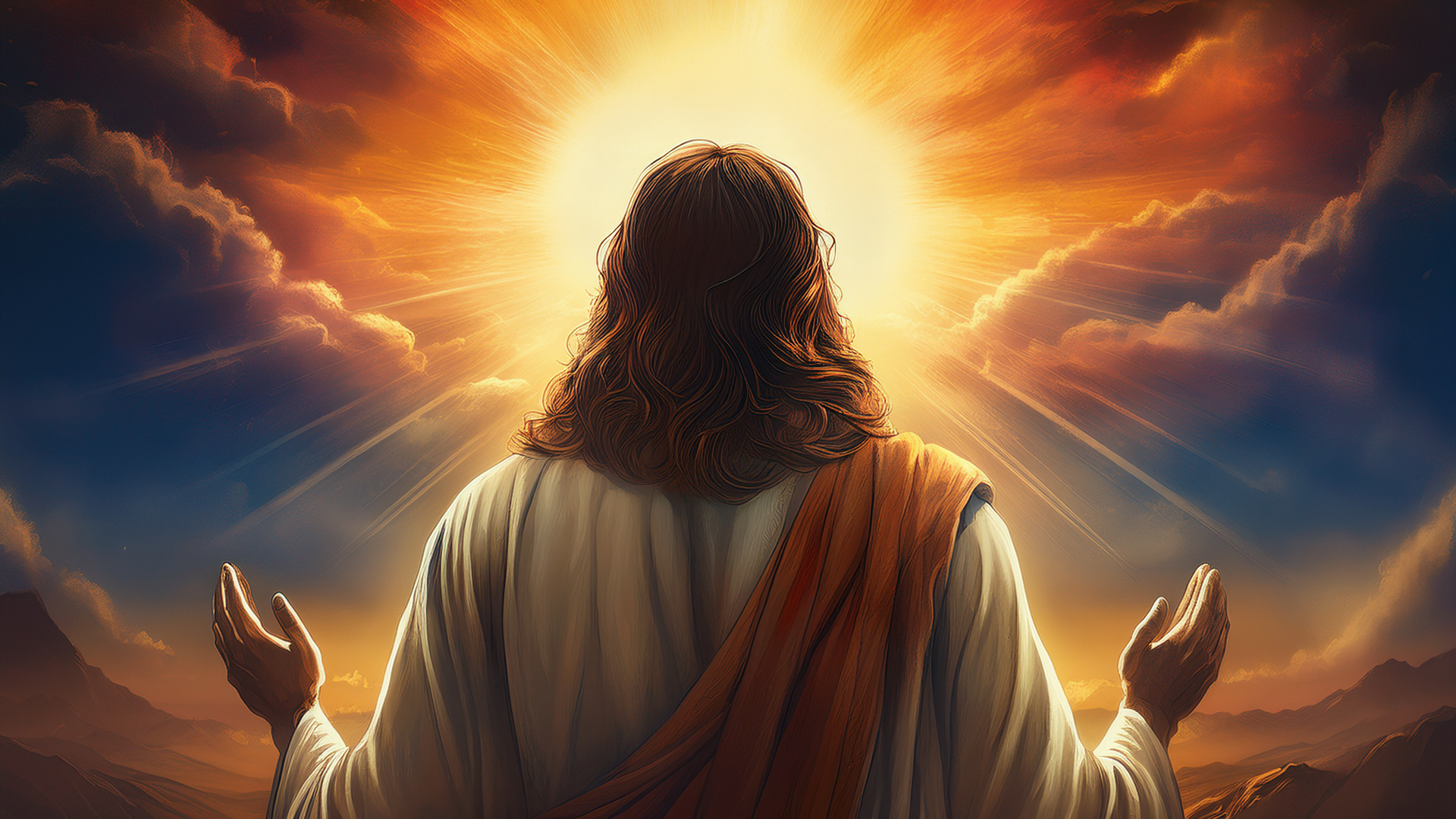
The Divine Blueprint: Mirroring Leviticus 16
The structure of John 17 is not accidental; it is rich in Old Testament symbolism. To truly understand this prayer, one must look at it alongside Leviticus 16, which outlines the duties of the High Priest on the Day of Atonement.
According to the Levitical Law, the ancient High Priest followed a specific three-fold order:
He dealt first with himself and his relationship with God.
He dealt with the priestly order and his inner circle.
He made atonement for the entire nation of Israel.
Jesus mirrors this structure perfectly in John 17. He begins by praying for Himself (verses 1-5), then shifts His attention to His disciples (verses 6-19), and finally concludes by praying for all people of God throughout history (verses 20-26). Because Jesus is our faithful High Priest, His actions on our behalf are perfectly effective.
The State of Exaltation
As Jesus begins this prayer, He speaks with absolute certainty, as if His victory over the world has already taken place. He looks away from the world and toward heaven, signaling that His "state of humiliation"—His time living and dying as a man—is coming to an end, and His "state of exaltation" is about to begin. Unlike the Old Testament priests, Jesus did not need to offer a sacrifice for His own sins before He was qualified to pray; being sinless, He moved directly to a request for glorification so that He might ultimately glorify the Father.
--------------------------------------------------------------------------------
The Covenant of Redemption: An Eternal Gift Exchange
A central concept in the text is the Covenant of Redemption. This is an eternal agreement between the Father, the Son, and the Holy Spirit. In this "covenant structure," the parties are identified, and the historical relationship is recounted.
The Father promises to give the Son a specific people as His "treasured possession".
The Son agrees to redeem those people.
The Holy Spirit agrees to apply the benefits of that redemption to them.
This covenant sets universal history in motion, ensuring that every event from the beginning to the end of time occurs to fulfill this divine agreement. Jesus emphasizes that the Father has given Him authority over all flesh specifically to give eternal life to those given to Him in this covenant.
A Relational Definition of Eternal Life
While many religions define eternal life as material luxury, power, or a state of nothingness, the text highlights Jesus’ unique definition: Eternal life is knowing the only true God and Jesus Christ. This knowledge is not merely informational; it is relational. It is a personal relationship with the Father through the Son, and it is the ultimate reward of the covenant.
--------------------------------------------------------------------------------
Security: Why You Cannot "Fall Away"
One of the most comforting points made by the text is that Jesus’ prayer guarantees the security of our salvation. As our High Priest, Jesus asks the Father to "keep them in your name".
This security does not mean we are shielded from earthly hardship or suffering. Rather, it means the Father preserves us from being "devoured by the devil" and from "finally and fully falling away from the faith". The text provides a vital theological distinction: we persevere only because God preserves.
The Case of Judas Iscariot
The text addresses the potential contradiction of Judas Iscariot, whom Jesus calls the "son of destruction". While it might seem Jesus "lost" one disciple, the Bible clarifies that Judas was never one of the "true sheep" given to the Son in the covenant. His betrayal was the fulfillment of scripture, proving that while someone can look like they belong on the outside, only those with a heart preserved by the Father truly belong to Him. For the true believer, the devil will never win; they will never belong to the world again.
--------------------------------------------------------------------------------
Sanctification: Transformation through the Word
Jesus’ second major request is for the Father to sanctify believers in the truth, which He defines as God’s Word. According to the Scriptures, sanctification happens in two distinct phases:
Definitive Sanctification: A once-for-all act at the moment of salvation where the Holy Spirit breaks the bondage of sin.
Progressive Sanctification: A lifelong process where the Spirit enables the believer to put sin to death and conform more to the image of Christ.
The primary instrument for this transformation is the Word of God. This is why it is vitally important that we must be "people of the word"—reading, singing, praying, and memorizing it.
The Act of Consecration
Jesus "consecrates" or sets Himself apart for the purpose of our sanctification. The text points to the parallel of the High Priest in the Old Testament who wore plain white linen to symbolize purity during his duties. Jesus sets Himself apart so that we might be pure, and we are instructed to "put on the Lord Jesus Christ" as our own holy garments of righteousness.
--------------------------------------------------------------------------------
Glory: The Ultimate Destination
The climax of Jesus’ prayer is His desire for His people to be with Him where He is to behold His glory. This refers to the infinite splendor and pre-existence He shared with the Father before the foundation of the world.
The text provides a powerful contrast to the Old Testament ritual:
The Old Covenant: The High Priest had to use a cloud of incense to shield his eyes from God's presence at the Ark of the Covenant so he would not die.
The New Covenant: Jesus "tears the veil," inviting us directly into the presence of God to see His glory and live.
This is the end goal of our faith: to witness the magnificent, rare, and unique glory of the Son and to have the same love that exists between the Father and the Son dwell within us.
--------------------------------------------------------------------------------
Conclusion: A Prayer That Cannot Fail
The High Priestly Prayer of John 17 changes how we view our standing with God. Our salvation is not based on our own works, but on the works of Christ, who perfectly fulfilled the obligations of the eternal covenant.
In conclusion, because Jesus has prayed for us, we have three unshakable pillars of assurance:
Security: God will keep us from falling away.
Sanctification: The Word of God will continue to transform us.
Glory: We will eventually behold the eternal splendor of Christ.
We are a people given by the Father to the Son, and returned by the Son to the Father in a divine gift exchange that guarantees our eternity.