
The Great Exchange: Understanding the Power of the Resurrection
The Great Exchange is a concept that sits at the very heart of the Christian faith: It isn't just a theological term; it is the divine transaction that guarantees our salvation and defines our relationship with God.
The resurrection of Jesus Christ is the ultimate proof that this exchange was successful. It serves as the guarantee that our debt has been paid and that a new "currency" has been made available to us—the righteousness of Jesus Himself.
The Problem of Spiritual Currency
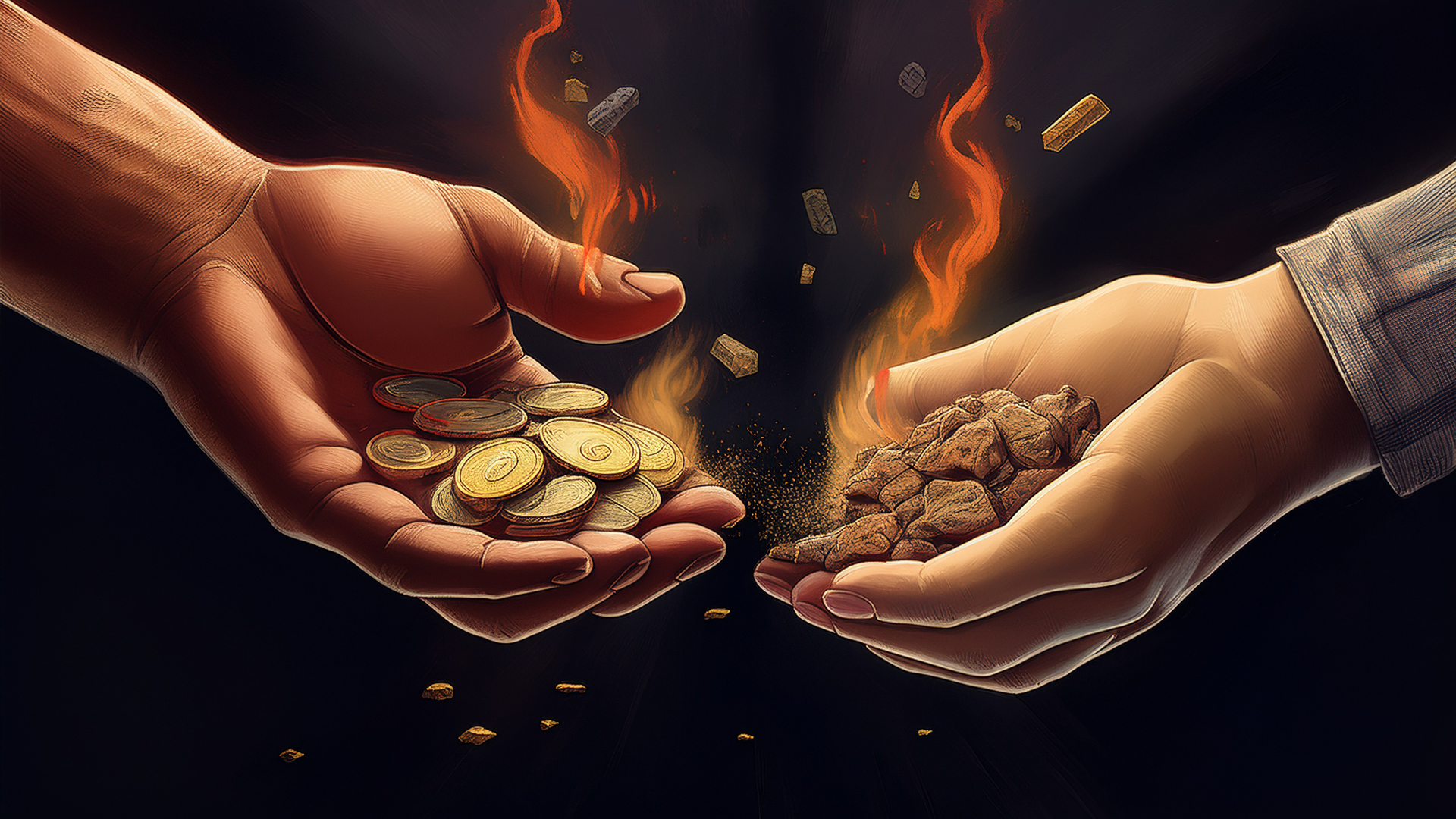
To understand the Great Exchange, we can consider an analogy of currency exchange when traveling overseas. In many parts of the world, US dollars are not accepted. To function in a different country, you must find a qualified person and a specific place to exchange your money for the local currency.
Sometimes, the exchange rate is staggering. You might give a small amount of one currency and receive millions in another, or vice versa, because what you have "is no good in that place". Spiritually, we face the same dilemma. We attempt to enter the Kingdom of God carrying the currency of sin, guilt, and shame, but that currency has no value there. In fact, it only leads to death.
God, in His mercy, provided both the Person (Jesus) and the Place (the Cross) to make the necessary exchange. We give Him our sin; He gives us His grace, mercy, and righteousness.
Setting the Scene: Purity vs. Defilement
The narrative of this exchange unfolds in John 18:33-40, during the trial of Jesus before Pontius Pilate. The setting itself is rich with irony and spiritual significance. Jesus is brought to Pilate’s headquarters, a Roman government building.
The Jewish religious leaders refused to enter the headquarters because it was considered a ritually unclean place. To enter a Greek residence during Passover week would, in their eyes, defile them and make them unfit to participate in the holy festival.
However, notice the profound truth here: Jesus willingly entered the place of defilement. He wasn't dragged there against His will. Earlier, in the Garden of Gethsemane, He had demonstrated His power by causing 600 soldiers to fall to the ground with just a word. Jesus was in Pilate’s headquarters on purpose. He went into the place of uncleanness which points to the spiritual significance of what Jesus came to do for us. He enters the place of defilement so that our uncleanness could rest upon Him, allowing us to be washed, purified, and made fit for His kingdom.
Jesus as the Personal Sacrifice
Unlike a bank teller who has no personal stake in a currency exchange, Jesus is personally related to the transaction. He is not just the one making the exchange; He is the exchange. The sources highlight how Jesus fulfills two major Old Testament shadows:
The Passover Lamb: During Passover, a lamb was sacrificed, and its blood was placed on the doorposts so that the "Angel of Death" would pass over that house. Jesus is the true Passover Lamb whose blood covers our sin so that judgment passes over us.
The Day of Atonement: This holy day involved two goats. One was sacrificed for the people's sins, while the other—the scapegoat—had the sins of the people symbolically placed upon it and was sent "outside the camp" to die. This is why Jesus was crucified at Golgotha, outside the city walls—He was bearing the uncleanness of the people away forever.
Is Jesus Your King? A Personal Decision
As the trial proceeds, Pilate asks Jesus, "Are you the king of the Jews?". Jesus responds with a question that echoes through the centuries: "Do you say this of your own accord or did others say it to you about me?".
Jesus was challenging Pilate to move beyond factual information or secondhand reports. This is a crucial point for anyone exploring faith: Faith is not inherited. You cannot rely on the faith of your parents or your upbringing. You must decide for yourself who Jesus is.
Think about what you know about chairs. You can describe a chair's four legs, its seat, and its purpose as a place of rest. You can know every fact about the chair, but you aren't actually trusting the chair until you sit in it. The question isn't "Is Jesus a King?" but "Is Jesus YOUR King?".
A Kingdom Not of This World
Jesus clarifies the nature of His authority by stating, "My kingdom is not of this world". If His kingdom were an earthly one, His servants would have fought to prevent His arrest. Instead, Jesus reveals that His is a spiritual kingdom.
This spiritual kingdom breaks through all physical and social barriers:
It is not limited by ethnicity or background.
It is accessible to the "Jew and Greek, slave and free".
It does not require affluence, a specific language, or a certain social status.
Because this kingdom is spiritual, you aren't born into it physically; you must be "born again" into it. This involves a fundamental change of heart—what Ezekiel 36 describes as God removing a "heart of stone" and replacing it with a "heart of flesh". When this spiritual transformation occurs, we begin to listen to the voice of the Shepherd.
The Verdict: Not Guilty
One of the most powerful moments in the trial is when Pilate, the Roman authority, declares: "I find no guilt in him". This pronouncement fulfills the prophecy of the "Suffering Servant" in Isaiah 53, who had "done no violence" and had "no deceit in his mouth".
This judicial declaration of innocence is a mirror of what God does for us. In the Great Exchange, our guilt is transferred to the innocent Jesus, and His perfect righteousness is transferred to us. Because of Jesus, God makes a judicial declaration over our lives: Not Guilty.
Barabbas: The Substitute in Action
To drive home the reality of the exchange, the narrative introduces Barabbas, a robber and criminal. According to custom, Pilate offered to release one prisoner for the Passover. Instead of choosing a "righteous" person, the crowd demanded the release of Barabbas and the crucifixion of Jesus.
In this moment, we see a physical manifestation of the Gospel: The perfect man is exchanged for the guilty one. We are all Barabbas. We have all tried to "rob God of His glory" and deserve the wages of sin, which is death. But Jesus stood in as our substitute.
He didn't just suffer the physical pain of nails and thorns; He drank the "cup of the wrath of God" that we deserved. The King was taken captive so that the rebels could go free.
Conclusion: The Victory of the Resurrection
The Great Exchange would be a tragedy if it ended at the grave. But the resurrection is the final "receipt" that the transaction was accepted by God. When Jesus rose three days later, He signified that:
The penalty was paid in full.
The justice of God was satisfied.
The power of sin and death was broken.
Because He lives, we can know we have eternal life. We are no longer defined by our sin, but are now the righteousness of God.
Application: Who is Jesus to you today? Do you hear His voice? If you hear Him calling, do not harden your heart. Trust in the Lord of the Great Exchange. Give Him your sin and receive His life. As the scripture says, "If the Son sets you free, you will be free indeed".