
The Single Most Important Event in Human History: An In-Depth Study of John 19:16-30
Can a single event truly change everything? In world history, we often point to June 28, 1914. On that day, in the city of Sarajevo, a 19-year-old assassinated Archduke Franz Ferdinand. That one act of violence triggered a domino effect of alliances that led to World War I, permanently altering the global landscape. Yet, as significant as that event was, it pales in comparison to an afternoon 2,000 years ago on a hill called Golgotha.
The crucifixion of Jesus Christ is the single most important event in all of human history. While the world may see it as a tragic execution of a Jewish teacher, the Gospel of John reveals it as the climax of God’s redemptive plan—a moment that redefined the past, secured the future, and offers a new reality for every person today.
Drawing from John 19:16-30, we can identify three transformative truths about the cross: it reveals the true cost of our sin, it creates a new spiritual family, and it decisively crushes the power of sin forever.
--------------------------------------------------------------------------------
1. The Cross Shows the Cost of Sin
The journey to the cross was not a series of unfortunate accidents; it was a divine appointment. John 19:16-17 records that Jesus "went out bearing his own cross to a place called the place of the skull, which in Aramaic is called Golgotha".
The Foreshadowing of Isaac
To understand the weight of this moment, we must look back to Genesis 22. There, God called Abraham to take his "one and only son," Isaac, to Mount Moriah to offer him as a sacrifice. In a striking parallel, Isaac carried the wood for his own sacrifice up the mountain, just as Jesus carried the wood of the cross. When Isaac asked where the sacrifice was, Abraham prophetically answered, "God will provide the sacrifice, son".
On that day, God provided a ram caught in the thicket, and Isaac went free. But at Golgotha—the very same location as Mount Moriah—God did not stop the sacrifice. Instead, He provided His own "one and only son" to pay the price that humanity could not pay. The cross is the ultimate evidence of God's love, showing that He was willing to endure the very thing He spared Abraham from experiencing.
The Magnitude of Roman Crucifixion
John’s account of the actual crucifixion is surprisingly brief: "There they crucified him" (John 19:18). While the description is short, the reality was horrific. Historical records indicate that Roman crucifixion was the most brutal punishment in human history, designed to maximize pain and public humiliation.
Yet, God, in His sovereignty, chose this specific time in history for Jesus to die. He could have chosen a modern era of lethal injection or an earlier era of stoning, but He chose the era of the cross. Why? Because the cross provides a visual representation of the horror of sin.
Sin as Spiritual Treason
We often have too light a view of our transgressions, but the cross forces us to see sin as God sees it. Sin is not a minor mistake; it is spiritual treason. It is a deliberate rejection of God’s rule in favor of our own. The fact that it took the "worst punishment known to humans" to pay for sin demonstrates its gravity.
However, the physical torture was not even the worst part for Jesus. While two other criminals were crucified alongside Him, they did not experience what He did. On the cross, Jesus bore the divine wrath of God for all human sin. This internal, spiritual weight was so great that it caused Him to sweat drops of blood in the garden beforehand—a reaction the other criminals did not share. He took the punishment we deserved so that we could receive the grace we did not deserve.
--------------------------------------------------------------------------------
2. The Cross Creates a New Family
While the soldiers were focused on what they could take from Jesus, He was focused on what He could give to those He loved.
The Callousness of Man vs. the Love of God
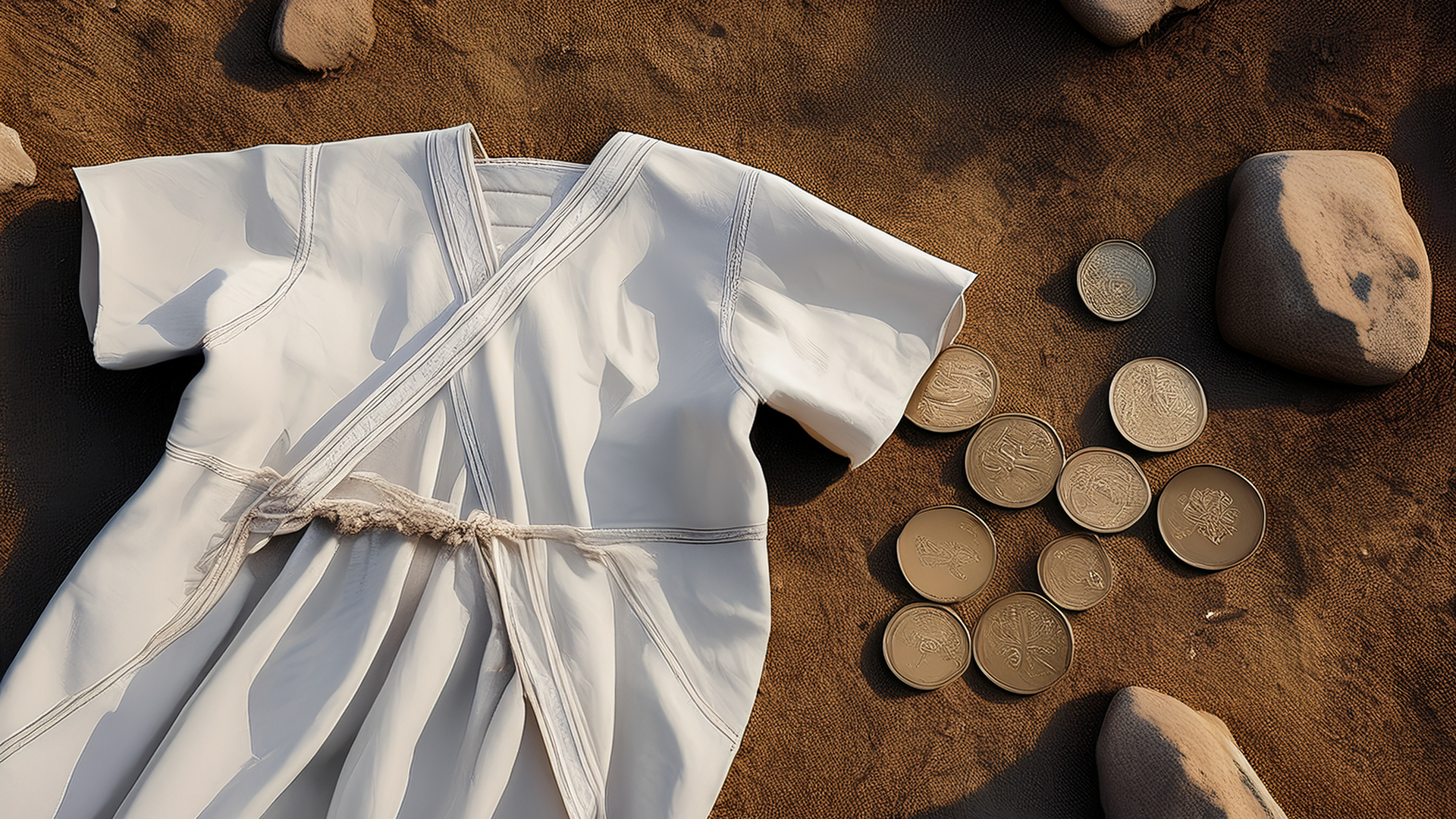
In John 19:23-24, we see a stark contrast between human nature and God's nature. Four soldiers stood at the foot of the cross, callously dividing Jesus’ garments. They even cast lots for His seamless tunic to avoid tearing it, fulfilling the prophecy in Psalm 22:18. These men were completely oblivious to the cosmic significance of the event unfolding before them; they were simply worried about getting a free piece of clothing.
While they were taking, Jesus was giving. Even in His agony, He looked down and saw His mother, Mary, and the "disciple whom He loved" (John).
Redefining Family
In Jewish culture, biological lineage and genealogy were paramount. Your family was your identity and your security. However, from the cross, Jesus redefined the concept of family. Knowing His mother would need care as a widow, He did not look to His biological brothers (who did not yet believe in Him). Instead, He said to Mary, "Woman, behold your son," and to John, "Behold your mother".
In this moment, Jesus established the spiritual family of the church. He taught that our bond in Christ is even more significant than our biological ties. This "new family" is characterized by mutual responsibility. Just as John took Mary into his home that very hour, we are called to carry one another's burdens so that no one has to walk through life alone.
When a church functions as this new family, selfishness fades away. We stop worrying solely about our own needs because we know our brothers and sisters are looking out for us, freeing us to focus on serving them.
--------------------------------------------------------------------------------
3. The Cross Crushes Sin
The final moments of Jesus’ life on earth were not characterized by defeat, but by absolute authority. John notes that "Jesus, knowing all was now finished," spoke to fulfill the final scriptures.
Complete Control
Unlike any other victim of crucifixion, Jesus remained in complete control of His life until the very end. He did not have His life taken from Him; He "gave up His spirit". He was fully man, experiencing the agony of thirst in the Middle Eastern heat, yet He was fully God, sovereignly directing the timeline of His sacrifice.
"It Is Finished"
When Jesus received the sour wine, He declared three words that changed the legal standing of humanity: "It is finished". In the original language, this was a commercial term meaning "paid in full."
This declaration carries three massive implications for us today:
The Payment is Complete: Jesus does not need to suffer further. He did not go to hell to continue paying for sin; the debt was satisfied entirely on the cross.
Every Sin is Covered: For the believer, every sin—past, present, and future—was paid for 2,000 years ago. You do not need to "re-pay" for your mistakes through guilt or penance because the transaction is already closed.
Victory is Available Now: Because the penalty is paid, sin no longer has legal rule over the believer. You do not have to live a defeated life filled with shame. You are reconciled to God, and your relationship with Him is restored.
--------------------------------------------------------------------------------
Conclusion: How Should We Respond?
The message of the cross is not merely a history lesson; it is the "good news" that demands a response.
For those who are not yet followers of Jesus, the invitation is open: Follow Him today. The work required for your forgiveness has already been completed; you need only to receive it.
For the believer, the message of the cross should be a safeguard against callousness. We should never become "used to" the story of the crucifixion. Instead, it should spur us toward deeper worship, gratitude, and a life lived as a "living sacrifice".
As we reflect on John 19, let us remember that the most important event in history was not an assassination in 1914, but a sacrifice in 33 A.D.. Because of that day, it is finished, and we can walk in total freedom.